Complete Guide to the Federal Solar Tax Credit in 2026
Get the full breakdown of the 2026 federal solar tax credit. Learn eligibility, savings, and how to claim your 30% credit before it phases down.

Author: Matthew Brow
Reviewed: Nora Patel

Solar Cost Playbook
Lock in 30% off your solar system. No cap. This is the year to act.
- You can claim 30% of total system costs as a direct tax credit with no dollar cap in 2026.
- Your system must be placed in service by December 31, 2026 to lock the full rate before it drops to 26%.
- The credit is non-refundable but rolls over to future tax years if you don't owe enough taxes.
What Is the Federal Solar Tax Credit (ITC) in 2026?
Let’s cut through the noise. The federal solar tax credit—officially called the Investment Tax Credit (ITC)—is the single most powerful financial incentive for going solar in America. In 2026, it remains a flat 30% credit on your total solar system cost. No dollar cap. No tricks. That means if your system costs $30,000, you get $9,000 back from the IRS.
Here’s the critical distinction: this is not a rebate. A rebate is a discount you get at the point of sale. The ITC is a dollar-for-dollar reduction of the federal income tax you owe for the year you install the system. You don’t get a check in the mail. You get a smaller tax bill—or a bigger refund if you’ve already overpaid throughout the year.
How the 30% Credit Actually Works
Think of it this way: you pay Uncle Sam based on your total taxable income. The ITC directly subtracts from that amount. If you owe $8,000 in federal taxes and your solar credit is $9,000, your tax bill drops to zero. The remaining $1,000? That carries forward to next year’s taxes. You don’t lose it.
Here’s a simple breakdown:
| Your Tax Liability Before Solar | Solar Credit Amount | New Tax Bill | Carryover to Next Year |
|---|---|---|---|
| $5,000 | $9,000 | $0 | $4,000 |
| $12,000 | $9,000 | $3,000 | $0 |
| $0 (no tax owed) | $9,000 | $0 | $9,000 (full carryover) |
That last row is important. If you don’t owe any federal income tax in 2026, you can’t use the credit that year. But it doesn’t expire. You roll it forward until you have enough tax liability to absorb it. The IRS gives you up to 20 years to use the full credit.
Residential vs. Commercial: Same Percentage, Different Rules
The 30% rate applies to both homeowners and businesses, but the mechanics differ slightly.
For homeowners: You claim the credit on your personal tax return (Form 5695). You must own the system—leasing or power purchase agreements (PPAs) don’t qualify. The system must be placed in service between January 1, 2026, and December 31, 2026. It has to be at your primary or secondary residence in the U.S. Vacation homes count. Rental properties? Only if you live there part of the year.
For commercial systems: Businesses claim the credit under different IRS rules. They can stack it with other incentives like depreciation or the Energy Investment Tax Credit for large-scale projects. The 30% is the same, but the eligibility window and carryforward rules are more flexible. Commercial systems also qualify if they’re on a building you own, even if you don’t occupy the space.
What Counts Toward the 30%?
This is where most people leave money on the table. The credit applies to the total installed cost—not just the panels. Here’s what the IRS allows:
- Solar panels and mounting equipment
- Inverters (microinverters, string inverters, power optimizers)
- Wiring and electrical panel upgrades (if required by code)
- Battery storage (if charged by solar at least 75% of the time)
- Labor, permits, and inspection fees
- Sales tax on all equipment
- Roof preparation work (structural reinforcement, flashing, but not the new roof itself)
What doesn’t count: A new roof, tree trimming, or general home improvements unrelated to solar. The IRS is strict here. If you need a roof replacement, do it before the solar install. Then the solar system goes on top, and only the solar portion qualifies.
Why 2026 Is a Pivotal Year
The ITC has been on a rollercoaster. It dropped to 26% in 2020, then the Inflation Reduction Act pushed it back to 30% through 2032. Starting in 2033, it steps down to 26%, then 22% in 2034, and disappears for residential systems in 2035. Commercial systems get a permanent 10%.
2026 is the sweet spot. You get the full 30% with no phase-down looming. And because there’s no dollar cap, high-end systems with battery storage and premium equipment get the same proportional benefit as a basic setup.
The "Non-Refundable" Trap Explained
You’ll hear the term "non-refundable credit" thrown around. It sounds scary, but it’s simple. A non-refundable credit can only reduce your tax bill to zero. It won’t give you a refund beyond what you already paid in. A refundable credit (like the Child Tax Credit) can send you a check even if you owe zero.
So if you install a $40,000 system and get a $12,000 credit, but you only owe $5,000 in taxes, you get $5,000 wiped out and $7,000 carried forward. You don’t lose the money—you just have to wait.
Pro tip: If you’re retired and living on Social Security or pension income, you may have little to no tax liability. In that case, consider having a working family member co-own the system, or time the installation for a year when you have higher income (like a Roth conversion or capital gains realization).
How to Claim It
You don’t need an accountant, but it helps. Here’s the process:
- Get a signed certification from your installer confirming the system meets IRS standards.
- Fill out IRS Form 5695 (Residential Energy Credits). It’s short—about 15 lines.
- Enter the credit amount on Schedule 3 (line 5) of your Form 1040.
- Attach Form 5695 to your tax return.
That’s it. No pre-approval, no waiting for government approval. You claim it when you file.
Common Misconceptions
- "I can get the credit if I lease." No. Only owners qualify. Leasing companies get the credit, not you.
- "The credit covers my new roof." No. But if you reinforce the roof to hold panels, that labor counts.
- "I need to have a high income to benefit." Not exactly. You need tax liability. If you owe $2,000, you can use $2,000 of the credit and carry the rest.
- "It’s a one-time thing." You can claim it once per property. If you add more panels later, you can claim again on the new equipment.
The Bottom Line for 2026
The 30% ITC is a massive, non-negotiable discount on the biggest home energy upgrade you’ll ever make. It’s simple to claim, has no cap, and applies to both residential and commercial systems. The only catch? You have to owe taxes to use it—and you have to own the equipment.
If you’re planning to go solar, 2026 is the year. The credit is fully locked in, battery storage qualifies, and there’s zero risk of phase-down. Get your system installed and operational by December 31, 2026, and you lock in that 30% for life. No future tax changes can touch it.
Who Qualifies for the 2026 Solar Tax Credit?
Let's cut through the noise. The 2026 Federal Solar Tax Credit—officially the Residential Clean Energy Credit—isn't for everyone. But if you own property in the U.S. and pay federal taxes, you're likely in the game. Here’s exactly who qualifies, and who gets left out.
You Must Be a U.S. Taxpayer
This is non-negotiable. The credit is a dollar-for-dollar reduction of your federal income tax liability. If you don't owe federal taxes, you don't get the credit. It's not a refund check from the IRS. It reduces what you owe, down to zero. Any leftover credit does roll over to the next tax year, but you can't get cash back for unused amounts.
Key numbers:
- The credit is 30% of total system cost in 2026 (no phase-down yet).
- You must have tax liability equal to or greater than your credit amount to use it fully in one year.
- Unused credit carries forward indefinitely.
Primary Residences: The Cleanest Path
Your main home qualifies. Simple. That includes single-family houses, condos, townhomes, and even mobile homes (if permanently affixed to land). The system must be on property you own. Renters? Sorry—you can't claim the credit unless the landlord installs it and qualifies themselves.
What counts as "placed in service"? The IRS uses this phrase to mean the system is fully installed and generating electricity. Not ordered. Not paid for. Running. That's your qualifying date.
Secondary Residences: Yes, Vacation Homes Work
Here's a major win for second-home owners. The 2026 credit applies to vacation homes, beach houses, lake cabins—any secondary residence you own and use personally. The same 30% applies. No cap on value.
But there's a catch: The home must be in the United States. No solar panels on your place in Cabo. Also, you must use the property at least some of the year. If it's purely a rental with zero personal use, different rules apply (see below).
Quick comparison table:
| Property Type | Qualifies? | Notes |
|---|---|---|
| Primary residence | ✅ Yes | Standard rules |
| Vacation home (personal use) | ✅ Yes | Same 30% credit |
| Rental property (short-term, personal use) | ✅ Yes | Must meet "residence" definition |
| Purely rental (no personal use) | ❌ No | Falls under business depreciation rules |
| Land only (no structure) | ❌ No | Must be on a dwelling |
New Construction vs. Existing Homes
Existing homes: You're golden. Install solar on a house built in 1985 or 2023—same rules. The credit applies to the equipment, labor, and any structural upgrades needed (like roof reinforcements for panel weight). But not the roof itself unless it's solar-integrated (solar shingles).
New construction: Here's where it gets tricky. If you're building a house and installing solar during construction, you can claim the credit. But you can only include the cost of the solar system itself—not the entire construction bill. Work with your builder to get a separate invoice for the solar portion. The IRS expects clear documentation.
Important nuance: If you buy a newly built home with solar already installed, you can claim the credit as long as you're the first owner. The developer can't claim it and pass it to you. You file it yourself.
Vacation Homes: The Fine Print You Need
Your beach house qualifies—but only if you use it as a residence. The IRS defines a "residence" as a property with sleeping, cooking, and bathroom facilities. So a tiny cabin with a camp stove and an outhouse? Probably not. A proper vacation home with a kitchen and shower? Yes.
Personal use requirement: You must use the vacation home for at least 14 days per year, or 10% of the days it's rented. If you rent it out 200 days and use it 5, you're in rental territory. That triggers different rules.
Rental Properties: The Split-Use Trap
This is where most people stumble. You can claim the credit on a rental property, but only if you also use it personally. The credit applies to the portion of the system that serves your personal use. If you rent a condo for 300 days and stay there 65 days, you can claim roughly 18% of the system cost (65/365). The rest falls under business depreciation.
What doesn't qualify:
- A pure rental property with zero personal use (e.g., a duplex you never visit).
- A property you own but don't live in, used entirely as a short-term rental (unless you stay there enough).
- Commercial solar installations (those go under Section 179 or Investment Tax Credit for businesses).
Ownership and Installation Rules
You must own the system. Leases and Power Purchase Agreements (PPAs) don't qualify you for the credit—the company that owns the panels claims it. If you want the credit, buy the system outright or finance it with a loan (where you're the owner).
Installation must be:
- On your property (roof, ground-mount, or even a detached garage)
- Completed in 2026 (or earlier, if you're catching up with carryforward)
- Compliant with local building codes
Who Absolutely Does NOT Qualify?
Let's be blunt:
- Non-taxpayers: If you owe $0 in federal income tax, you get $0 credit (though carryforward helps).
- Renters: Unless you own the panels and the landlord agrees—very rare.
- Business entities: LLCs, corporations, partnerships (they use different forms).
- Foreign property owners: Must be a U.S. taxpayer with a U.S. property.
The 2026 Twist: No Phase-Down Yet
Originally, the credit was set to drop to 26% in 2023, then 22% in 2024, then expire. The Inflation Reduction Act reset it. In 2026, it's still 30%. That stays through 2032. So don't panic—but don't wait. The 30% is locked, but installation costs and interest rates won't stay this favorable forever.
Final Eligibility Checklist
Before you spend a dime, run through this:
- You are a U.S. taxpayer with federal income tax liability
- You own the property (primary, vacation, or mixed-use rental)
- You own the solar system (no lease/PPA)
- The system is on a qualifying residence (with kitchen, bath, sleep space)
- Installation is complete in 2026
- You have documentation: receipts, contracts, manufacturer specs
If you checked every box, you're in. The 30% credit is yours. Next step: calculate your system cost and see how much you'll save. Spoiler: on a $25,000 system, that's $7,500 back from Uncle Sam.

What Costs Does the 30% Credit Cover?
Let’s get straight to the point: the 30% credit applies to the entire cost of turning your roof into a power plant. But not everything on your contractor’s invoice qualifies. I’ve seen homeowners lose thousands because they assumed “solar installation” covered the whole bill. It doesn’t.
Here’s the breakdown of what the IRS actually allows—and what they’ll reject.
Eligible Costs: The Full List
The IRS treats your solar system as one integrated piece of equipment. That means every component required to make it work—from the panels to the permits—counts toward the 30% credit.
Solar panels (PV modules). This is the obvious one. Any photovoltaic panel that converts sunlight into electricity qualifies. Doesn’t matter if it’s monocrystalline, polycrystalline, or thin-film. The credit applies.
Inverters. Your panels produce DC electricity. Your home runs on AC. Inverters bridge that gap. String inverters, microinverters, and power optimizers all qualify. If you’re installing a system with module-level power electronics, those costs count too.
Racking and mounting equipment. The rails, clamps, flashing, and brackets that hold your panels to the roof are eligible. So are ground-mount systems if you’re not putting them on the roof. The IRS views this as “structural support” for the solar equipment.
Wiring and electrical components. This includes the cables, conduit, disconnect switches, junction boxes, and combiner boxes. Anything that carries electricity from the panels to your main panel is fair game. Even the trenching for underground conduit counts—if the conduit is specifically for solar.
Labor. This is a big one. Installation labor is 100% eligible. That includes the electrician’s time, the roofer’s time (if they’re only working on solar attachments), and the crew’s wages. The IRS doesn’t care if you hire a national installer or a local handyman—as long as the labor is directly tied to installing qualified equipment.
Permits and inspection fees. Most homeowners forget this. Your city or county charges for building permits, electrical permits, and final inspections. Those fees count toward the credit. Keep the receipts.
Sales tax. Yes, the sales tax you pay on solar equipment is included in the cost basis. If your state charges 8% sales tax on a $20,000 system, that’s $1,600 in eligible costs. The credit applies to that too.
Battery storage—but only if solar-charged. This is where it gets nuanced. Standalone batteries that charge exclusively from the grid do not qualify. But if your battery is connected to your solar panels and charges at least partially from solar, the full battery cost is eligible. The IRS clarified this in 2023: you don’t need to track how much energy comes from solar vs. the grid. If the battery is installed with solar and has the capability to store solar energy, it counts.
Upgraded electrical panels (if required). If your old electrical panel can’t handle the solar system’s output, you may need a panel upgrade. That cost qualifies—but only the portion required for solar. If you’re upgrading from 100 amps to 200 amps because you also want an EV charger and a hot tub, only the incremental cost for solar capacity is eligible. Get your contractor to itemize this.
Monitoring equipment. Energy production monitors, consumption meters, and communication gateways all qualify. These are considered integral to system operation.
Design and engineering fees. If you paid for a structural analysis, shade study, or system design, those costs count. They’re directly necessary for installation.
What Does NOT Qualify
This is where I see the most mistakes. The IRS is strict about what’s “solar-related” versus “home improvement.”
Roof repairs or replacement. If your roof needs new shingles or structural reinforcement before solar can go up, that cost is not eligible. The IRS views this as a home improvement, not a solar expense. Exception: if the roofer installs solar-specific mounting hardware during a re-roof, the labor for that hardware might be separable. Get a line-item invoice.
Non-solar equipment. Don’t try to sneak in a new water heater, HVAC system, or smart home hub. The IRS audits for this. Keep your receipts clean.
Extended warranties. A standard manufacturer’s warranty is baked into the panel cost and qualifies. But if you buy a separate 20-year labor warranty or a “production guarantee” from a third party, that’s not eligible. The IRS considers it a service contract, not equipment.
Tree removal or trimming. Even if trees shade your roof, cutting them down is a landscaping expense. No credit.
Permit expediting fees. If you pay a third party to fast-track your permit, that’s a service fee—not a permit fee. Not eligible.
Real-World Example: How the Math Works
Let’s say you get a quote for a $25,000 solar system. Here’s a typical breakdown:
| Cost Item | Amount | Eligible? |
|---|---|---|
| Solar panels | $10,000 | Yes |
| Inverters | $3,000 | Yes |
| Racking | $2,000 | Yes |
| Wiring & electrical | $1,500 | Yes |
| Labor | $5,000 | Yes |
| Permits & inspection | $500 | Yes |
| Sales tax (8%) | $1,760 | Yes |
| Roof repair (new flashing) | $1,000 | No |
| Battery storage (solar-charged) | $6,000 | Yes |
| Total invoice | $30,760 | |
| Eligible total | $29,760 | |
| Your 30% credit | $8,928 |
Notice the roof repair is excluded. That $1,000 doesn’t help your credit. But everything else—including the sales tax and battery—pushes your credit to nearly $9,000.
The “Battery-Only” Trap
What if you already have solar and want to add a battery later? Good news: the battery still qualifies for the 30% credit, but only if it’s charged by solar. If you install a battery without panels, you need to prove it’s connected to an existing solar array. The IRS allows this under the same rules—no separate requirement for “first installed with solar.”
But here’s the catch: if you install a battery before solar, and it’s charged from the grid for six months, the IRS may argue it’s not “solar-charged.” Plan the timing. Install the battery within the same tax year as your solar, or be ready to show it’s wired to accept solar energy.
What About DIY Installations?
You can claim the credit on a self-installed system. The IRS doesn’t require a licensed contractor. But you need to prove the equipment is “placed in service” and meets all safety codes. Your labor hours don’t count—you can’t pay yourself. But the cost of materials, permits, and any hired electrician does.
A Note on “Incidental” Costs
Some installers bundle “system monitoring fees” or “annual maintenance” into the quote. These are not eligible unless they’re a one-time fee for equipment. Recurring subscriptions (like a $15/month monitoring plan) are service charges. No credit.
The Bottom Line
You want every dollar of eligible cost on your invoice. Work with your installer to itemize everything—roof repairs, non-solar equipment, and extended warranties should be on separate lines. The more you can show as “solar equipment and installation,” the bigger your credit. And with battery storage now fully included, that 30% can easily stretch to cover $8,000–$12,000 on a typical system.
Keep your receipts. The IRS doesn’t require you to submit them with your tax return, but they can audit up to three years later. A clean paper trail is your best defense.
How to Claim the Credit on Your 2026 Taxes
Let’s get down to brass tacks. Claiming the federal solar tax credit isn’t complicated, but you need to follow the steps carefully. Missing a single form or miscalculating your liability can cost you thousands. Here’s exactly what you need to do.
Step 1: Gather Your Solar Documentation
Before you touch a tax form, collect these items. The IRS will want proof if they audit you.
- Your solar installation contract – Make sure it itemizes equipment costs, labor, and any sales tax paid.
- Final invoice or receipt – This shows the total system cost and the date it was placed “in service.” That’s the day your system passed inspection and started producing power.
- Manufacturer certification statement – Your installer should provide this. It confirms your panels meet IRS efficiency standards. Without it, you cannot claim the credit.
- Utility interconnection agreement – If your utility approved net metering, keep that paperwork. It proves the system is operational and grid-tied.
Keep digital copies and physical backups. You’ll need these if the IRS ever asks questions.
Step 2: Complete IRS Form 5695
This is the only form you need. Download the 2026 version from IRS.gov. Do not use last year’s form. The credit percentage and limits may adjust.
Here’s what each line means for you:
- Line 1: Enter the total cost of your solar system. Include panels, inverters, racking, wiring, labor, permits, and sales tax. Do not include battery costs yet—those go on a separate line.
- Line 5: If you installed a battery with a capacity of 3 kWh or more, add its cost here. The battery does not need to be charged solely by solar to qualify.
- Line 13: Multiply your total qualifying costs by 0.30 (the 30% credit rate for 2026). That’s your tentative credit.
- Line 14: Enter your regular tax liability from your 1040, line 24. This is the total tax you owe before any credits.
- Line 15: This is your actual credit. It’s the smaller of line 13 or line 14. You cannot claim more than you owe in taxes.
Example: Your solar system cost $25,000. Line 13 shows $7,500. Your tax liability is $6,000. Your credit is capped at $6,000. The remaining $1,500 carries forward.
Step 3: Apply the Credit to Your 1040
Form 5695 is an attachment. It does not stand alone. You must transfer the credit amount to your main tax return.
- On Form 1040, find line 20 for “Nonrefundable Credits.” Enter the number from Form 5695, line 15.
- This reduces your tax bill dollar-for-dollar. If you owe $6,000 and your credit is $5,000, you pay only $1,000.
Key point: This is a nonrefundable credit. You cannot get a refund for any unused amount. But don’t panic—carryover rules save you.
Step 4: Understand the Carryover Rules
What if your credit exceeds your tax liability? You don’t lose it. The IRS lets you carry the unused portion forward to future tax years.
Here’s how it works:
- Carryover period: You can carry forward any unused credit for up to 20 years. There’s no limit on how many years you can use it.
- No inflation adjustment: The carryover amount stays fixed. $1,500 carried forward in 2026 is still $1,500 in 2027.
- Apply it each year: On your 2027 return, you’ll complete a new Form 5695. You’ll enter the carryover amount from your 2026 form on line 16. Then you combine it with any new solar costs (if you expanded your system) to calculate your credit for that year.
Real-world scenario: You owe $4,000 in taxes in 2026 but have a $7,500 credit. You use $4,000 now. The remaining $3,500 carries to 2027. If you owe $5,000 in 2027, you can use the full $3,500 carryover. You pay only $1,500 in taxes.
This carryover is a powerful tool. It makes solar affordable even if you have a lower tax bill in the first year.
Step 5: Avoid Common Mistakes
I’ve seen homeowners lose thousands over small errors. Watch out for these:
- Incorrect cost basis: Do not include extended warranties, maintenance plans, or landscaping. Only direct system costs qualify.
- Forgetting sales tax: Sales tax paid on equipment is part of the system cost. Add it in.
- Using the wrong year’s form: The 2026 form may have different line numbers than 2025. Always download the current version.
- Ignoring battery rules: If you installed a battery with your solar, it qualifies separately. But if you installed the battery in a different tax year, it has its own credit calculation.
- Failing to sign: E-filing handles this automatically, but if you mail your return, sign Form 5695. Unsigned forms get rejected.
Step 6: Decide When to Claim
You claim the credit for the tax year your system is “placed in service.” That usually means the year your utility gives final approval and you flip the switch.
- If your system was installed in December 2026 but not approved until January 2027, you claim it on your 2027 taxes.
- If you paid a deposit in 2025 but didn’t complete installation until 2026, you claim the full cost in 2026.
Pro tip: If you’re close to year-end, ask your installer to expedite the interconnection. A few days can shift your credit to a more favorable tax year.
Step 7: Consider Amending a Previous Return
Did you install solar in 2024 or 2025 but forget to claim the credit? You can still get it. File an amended return using Form 1040-X and attach the corrected Form 5695 for that year.
- You have three years from the original filing deadline to amend.
- The credit percentage for 2024 and 2025 is also 30%, so you won’t lose out.
- This works even if you already filed your 2024 return. Just send in the amendment.
Quick Reference Table: Credit Calculation Example
| Item | Amount |
|---|---|
| Solar panel system cost | $22,000 |
| Battery storage cost | $3,000 |
| Sales tax (8%) | $2,000 |
| Total qualifying costs | $27,000 |
| Credit rate (2026) | 30% |
| Tentative credit | $8,100 |
| Your 2026 tax liability | $6,500 |
| Credit claimed in 2026 | $6,500 |
| Carryover to 2027 | $1,600 |
Final Checklist Before You File
- Confirm your system was placed in service in 2026.
- Collect all invoices and certification documents.
- Complete Form 5695 with accurate numbers.
- Transfer the credit to your 1040.
- Double-check your tax liability—don’t overclaim.
- Save every document for at least seven years.
That’s it. Follow these steps, and you’ll keep thousands of dollars in your pocket. The IRS makes it straightforward if you stay organized. Don’t overthink it—just get the forms right and file on time.
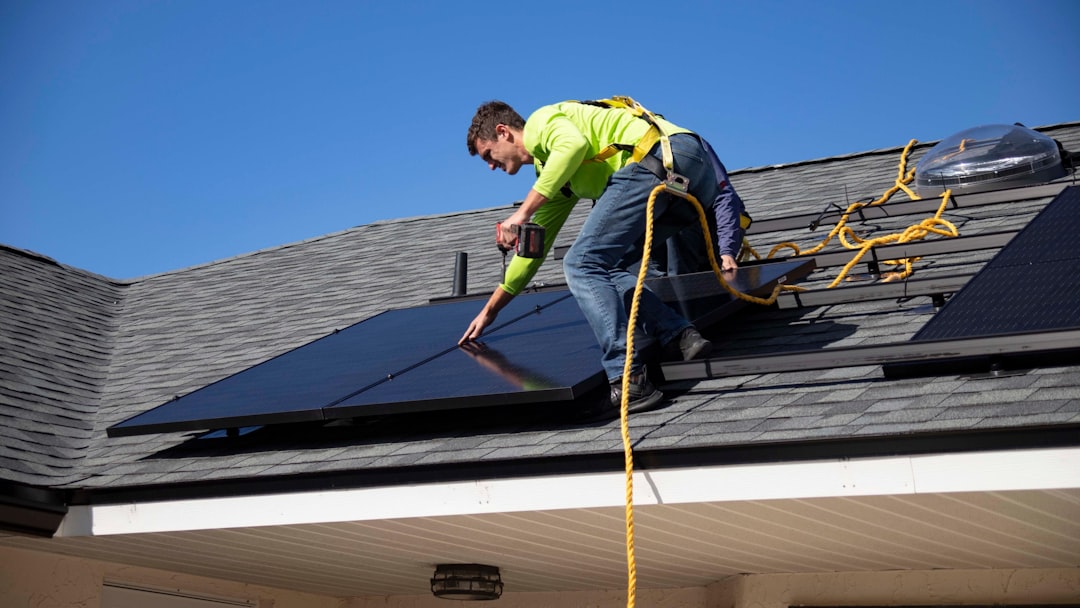
Why 2026 Is a Critical Year for Solar Savings
If you’ve been thinking about going solar, 2026 isn’t just another year on the calendar. It’s the last chance to lock in the full 30% federal tax credit. After December 31, 2026, that rate drops to 26%. That’s a straight-up $400 reduction on every $10,000 you spend. For a typical $30,000 system, you’re looking at losing $1,200 in direct savings.
Let’s break down exactly how the phase-down works, why waiting costs you real money, and what you need to do to secure the full 30%.
The Phase-Down Schedule: No Surprises
The Investment Tax Credit (ITC) follows a step-down schedule set by Congress. It’s not a rumor or a temporary promotion. It’s law. Here’s the timeline:
| Year | ITC Rate | What It Means for You |
|---|---|---|
| 2022-2032 | 30% | Full credit, no cap |
| 2033 | 26% | Step down begins |
| 2034 | 22% | Another drop |
| 2035 onward | 0% (residential) | Expires for homeowners |
Notice something critical? The first step-down happens in 2027, but the rate you get depends on when your system is placed in service. That means you have to have your solar panels operational—turned on and producing power—by December 31, 2026, to claim the 30% rate.
The "Placed in Service" Rule: The Fine Print That Matters
The IRS uses a specific term: "placed in service." This doesn’t mean when you sign a contract, get a permit, or pay a deposit. It means the date your system is fully installed, connected to the grid, and generating electricity.
Here’s the trap many homeowners fall into: They start the process in late 2026, thinking they have plenty of time. But solar projects have lead times. Permitting can take 2-6 weeks. Equipment delivery can take 3-8 weeks. Installation and final inspection add another 2-4 weeks. If you start in November, you’re gambling.
If your system gets pushed into January 2027, you lose 4% off the top. On that same $30,000 system, you’ve just thrown away $1,200. Not because solar isn’t still a good deal—but because you didn’t plan ahead.
Why Waiting Costs You More Than Just the Tax Credit
The ITC drop is the headline, but it’s not the only reason 2026 is a critical year. Consider the compounding effect of inflation and rising electricity rates.
- Electricity prices have been climbing 3-5% annually in most states. Every year you wait, your grid power costs more.
- Solar equipment prices have stabilized, but supply chain hiccups can still cause spikes. Locking in a 2026 installation often means locking in today’s pricing.
- Net metering policies are shifting. Some states are reducing what they pay you for excess solar energy. Getting in earlier means grandfathering into better rates.
Let’s put real numbers on it. Assume you live in a state with average electricity rates of $0.15/kWh, and your system offsets 10,000 kWh per year.
| Scenario | Year You Go Solar | ITC Rate | Tax Credit (on $30k system) | Annual Electricity Savings | 5-Year Total Savings (after credit) |
|---|---|---|---|---|---|
| Best case | 2026 | 30% | $9,000 | $1,500 | $16,500 |
| Waiting | 2027 | 26% | $7,800 | $1,500 | $15,300 |
| Delayed | 2028 | 22% | $6,600 | $1,500 | $14,100 |
That’s a $2,400 difference in just two years of waiting. And that doesn’t account for rising electricity rates, which would widen the gap even further.
How to Lock the Full 30% Rate
You don’t need to be an expert to secure the full credit. You just need a plan. Here’s the step-by-step timeline you should follow:
By March 2026: Get at least three quotes from reputable installers. Compare pricing, equipment quality, and warranties. Don’t just take the cheapest bid—look for companies with a proven track record and strong reviews.
By June 2026: Sign a contract. This locks in pricing and secures your place in the installer’s schedule. Demand for solar typically spikes in the second half of the year, and good installers book up fast.
By September 2026: Finalize permits and financing. Your installer should handle permitting, but you need to make sure your loan or cash payment is ready. If you’re using a solar loan, confirm there are no prepayment penalties.
By November 2026: Installation should be underway. Aim for a completion date by mid-December. This gives you a buffer for weather delays, inspection rescheduling, or utility interconnection hiccups.
By December 31, 2026: Your system must be operational. Get the final inspection signed off, and make sure your inverter is showing production. Take a photo of your monitoring system showing power generation. That’s your proof for the IRS.
The Bottom Line: Time Is Money
The federal solar tax credit is one of the best financial incentives available to homeowners. It directly reduces your tax liability dollar-for-dollar. But it’s not permanent. The 30% rate is the highest it’s been in over a decade, and it’s about to step down.
Waiting until 2027 means you’re voluntarily giving up thousands of dollars. Not because solar doesn’t still work financially—it does—but because the government is literally paying you less to make the switch.
Think of it this way: If someone offered you $1,200 to sign a contract by December, would you take it? That’s exactly what’s on the table. The only difference is, you have to act before the clock runs out.
2026 isn’t just another year for solar. It’s the deadline. Don’t let it pass you by.
Operational checklist before you commit
- Confirm your tax liability is high enough to use the credit (or plan to roll it over).
- Verify your solar installer is certified and uses eligible equipment (solar panels, inverters, racking, battery).
- Save all receipts, contracts, and the manufacturer's certification statement for your tax records.
Frequently asked questions
Can I claim the credit if I lease my solar panels?
No. Only the owner of the system can claim the tax credit. If you lease or enter a PPA, the installer or third party owns the system and gets the credit.
Does the credit cover battery storage without solar?
Yes, but only if the battery is charged by solar panels. Standalone batteries not connected to solar do not qualify in 2026.
Final takeaways
The 2026 federal solar tax credit is your best chance to cut solar costs by 30%. No cap. No gimmicks. But it won't last at this rate.
Talk to a tax professional to confirm your eligibility and get your system installed and running before December 31. That's how you lock in the savings.
Tools to validate your solar costs
Use these tools to calculate solar panel costs, utility inflation, and long-term savings potential.