Are Home Solar Batteries Worth the Extra Cost?
Solar batteries can cost $10k+. Are they worth it? We break down the math, payback period, and when backup power makes sense for your home.

Author: Matthew Brow
Reviewed: Nora Patel
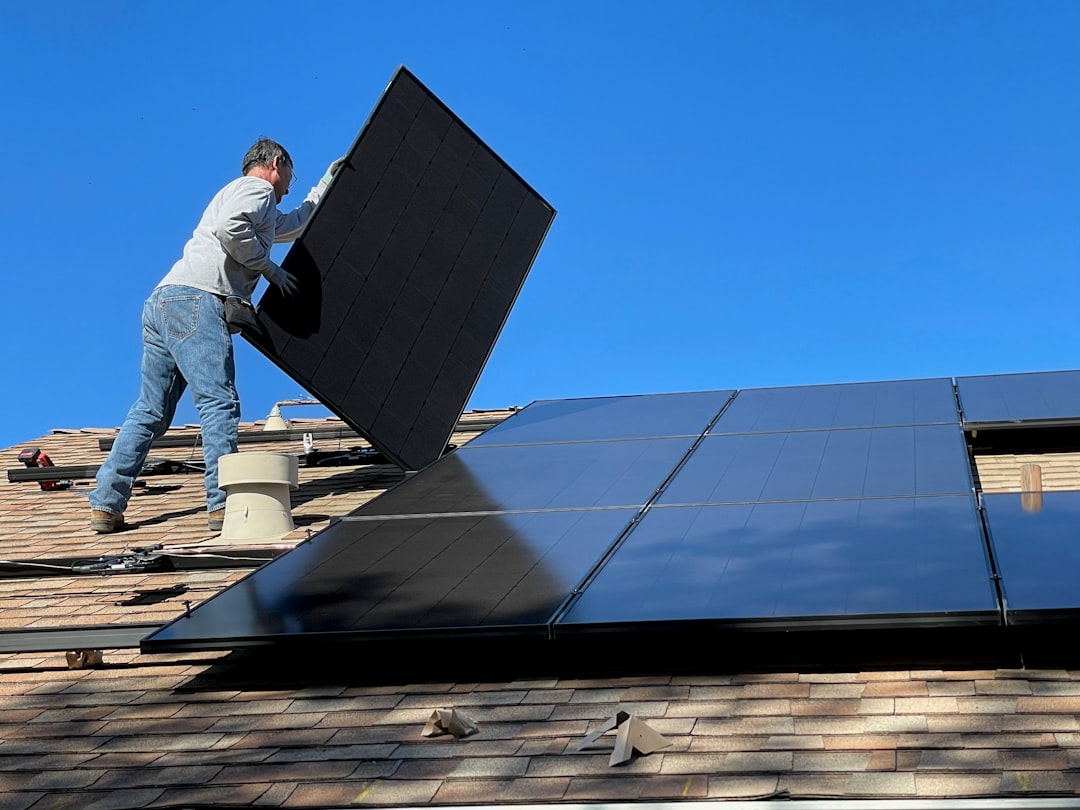
Solar Cost Playbook
A solar battery is an insurance policy, not an investment. Here is how to know if you need one.
- Batteries rarely pay for themselves with energy savings alone; focus on backup value and time-of-use rates.
- Without a battery, you still save money on solar. A battery adds resilience, not ROI.
- Only buy a battery if you have frequent power outages, time-of-use billing, or want energy independence.
The Real Price Tag: What a Battery Actually Costs
Let’s get real about the numbers. You’ve seen the ads: “Powerwall for $7,500!” That’s a trap. That price is hardware only—no installation, no permits, no tax. By the time a crew leaves your driveway, you’re looking at a very different figure.
The True Installed Cost Breakdown
Here’s what a typical home battery system actually costs, fully installed, in 2025. These are real U.S. averages after talking to installers in California, Texas, and the Northeast.
| Component | Tesla Powerwall 3 (13.5 kWh) | Enphase IQ Battery 5P (5 kWh) | LG Chem RESU16H Prime (16 kWh) |
|---|---|---|---|
| Hardware | $7,500 – $8,500 | $3,200 – $3,800 (per unit) | $8,000 – $9,500 |
| Labor & Permits | $2,500 – $4,000 | $1,500 – $2,500 | $2,000 – $3,500 |
| Electrical Panel Upgrade | $1,000 – $3,000 (if needed) | $800 – $2,500 | $1,000 – $3,000 |
| Total Installed | $11,000 – $15,500 | $5,500 – $8,800 (for 1 unit) | $11,000 – $16,000 |
| Cost per kWh stored | ~$815 – $1,148 | ~$1,100 – $1,760 | ~$688 – $1,000 |
Notice the range. The biggest variable isn’t the battery—it’s your house. Older homes often need a panel upgrade to handle the battery’s load. That alone can add $3,000 to your bill.
Why Labor Costs Vary So Much
You’re not paying for someone to plug in a toaster. A proper battery install takes 8 to 16 hours for a single unit. Here’s what that labor covers:
- Site survey – Mapping your panel, checking load capacity, finding wall space.
- Permit filing – Your city requires engineering stamps and fire code compliance. This isn’t optional.
- Wiring and conduit – Running heavy-gauge cable from the battery to your main panel. If your garage is far from the panel, labor jumps.
- Commissioning – Configuring the software, setting charge/discharge thresholds, and testing islanding (safety disconnect during grid outages).
A cheap quote often means they skip steps. Watch for installers who don’t pull permits. That voids your warranty and can cause insurance headaches later.
The Enphase “Stacking” Trap
Enphase sells a 5 kWh module. It’s small. You’ll likely need three or four to match a Powerwall’s capacity. That changes the math fast.
- One Enphase 5P: $5,500 installed. Great for critical loads only (fridge, lights, modem).
- Three Enphase 5Ps (15 kWh): $14,500 – $17,000 installed. Now you’re in Powerwall territory, but with more complexity.
- Four Enphase 5Ps (20 kWh): $18,000 – $22,000. This gives you whole-home backup, but costs more per kWh than a single large battery.
The upside? Enphase systems are modular. You can start with one unit and add more later without replacing the inverter. Tesla forces you to buy one big box. If you’re budget-constrained, Enphase lets you grow.
Hidden Costs That Sneak Up
Don’t ignore these. They’re not in the brochure.
- Sales tax – Some states exempt solar equipment but not batteries. Add 6–10% in places like California.
- Shipping and handling – Rarely itemized, but built into the quote. Ask for a line-item breakdown.
- Load controller – If you want to power specific circuits (not your whole house), you need a subpanel or load controller. That’s another $500–$1,200.
- Remote monitoring fees – Tesla’s app is free. Some Enphase and LG systems charge for extended cloud access or advanced analytics.
The 30% Federal Tax Credit Reality
Yes, you get 30% back on your federal taxes. But here’s the fine print:
- It’s a non-refundable credit. You won’t get a check if you owe less than the credit amount. You can carry it forward to next year.
- It applies to the total installed cost (hardware + labor + permits). Not just the battery sticker price.
- It does not cover panel upgrades unless the upgrade is specifically required for the battery to function. Your tax accountant will need to justify this.
So a $14,000 Powerwall install nets you a $4,200 credit. Your out-of-pocket becomes $9,800. Still a big number.
Financing Adds Another Layer
Most homeowners finance batteries. Here’s what that looks like:
- Cash: $14,000 upfront. No interest. You own it.
- Solar loan (7–12 year term): $0 down, but interest rates of 7–12% APR. A $14,000 system financed over 10 years at 9% costs you $21,000 total.
- Lease/PPA: $0 upfront, but you don’t own the battery. The leasing company keeps the tax credit and any energy savings. You get backup power but no financial return.
Pro tip: If you can’t pay cash, a home equity line of credit (HELOC) at 6–8% is often cheaper than a dedicated solar loan. Run the numbers.
The “Soft Cost” Problem
Hardware prices keep dropping. Tesla’s Powerwall 3 costs less per kWh than the original Powerwall 2. But soft costs—permitting, labor, customer acquisition—haven’t budged. They’re stuck at $2,000–$4,000 per install.
Why? Because every city has different fire codes. Some require a dedicated fire-rated enclosure. Others demand a 3-foot clearance around the battery. These rules vary block by block. Until permitting becomes standardized nationwide, labor costs stay high.
What You Should Actually Pay
Get three quotes. Here’s your sanity check range:
- Single battery (10–16 kWh): $10,000 – $16,000 installed before tax credits.
- Stacked system (20+ kWh): $18,000 – $25,000 installed.
- Lowest legitimate quote: $8,500 for a small Enphase setup with no panel upgrade.
If someone quotes you under $8,000 for a full install, ask why. They’re either skipping permits, using refurbished hardware, or not including critical labor steps. Walk away.
The real price tag isn’t just the number on the invoice. It’s the cost of the upgrade, the financing interest, and the lost opportunity of that cash sitting in your savings account. Know all of them before you sign.
Net Metering vs. Battery Savings: The Math You Need
Let’s cut through the hype. Your utility’s net metering policy is the single biggest factor determining whether a battery pays for itself or becomes a very expensive wall ornament. I’ve seen homeowners in Arizona save $2,000 a year with a battery, while a neighbor in California with the exact same system sees zero financial return. The difference? How your utility credits your exported solar power.
What Net Metering Actually Means for Your Wallet
Net metering is simple in theory: your solar panels send excess power to the grid during the day, and your meter runs backward. At night, you pull that power back. You’re using the grid as a free battery. Under full retail net metering (1:1 credit), you get paid the same rate for your exported electricity as you pay to buy it. In this scenario, a home battery is almost never worth it financially. You’re paying $10,000–$15,000 for something your utility already provides for free.
Here’s the hard math. If your utility pays you $0.30 per kWh exported and charges $0.30 per kWh at night, a battery just adds round-trip losses. Lithium-ion batteries lose about 10-15% of energy during charging and discharging. So for every 10 kWh you store, you only get 8.5–9 kWh back. You’re literally paying to lose energy.
When Net Metering Gets Nerfed
The game changes when your utility reduces net metering rates. This is happening everywhere. California’s NEM 3.0 now pays you only $0.08 per kWh exported while charging $0.40+ per kWh at peak times. That’s a 5x spread. In this environment, a battery becomes a financial tool, not an environmental statement.
Let me show you the numbers for a typical 8 kW system in a state with reduced net metering:
| Scenario | Annual Solar Production | Grid Exports (kWh) | Imported at Night (kWh) | Net Cost Without Battery | Net Cost With Battery | Battery Savings |
|---|---|---|---|---|---|---|
| 1:1 Net Metering | 10,000 | 5,000 | 5,000 | $0 | $600 (battery losses) | -$600 |
| Reduced Net Metering (0.3x export rate) | 10,000 | 5,000 | 5,000 | $1,050 | $150 | $900/year |
| Time-of-Use with Peak Rates | 10,000 | 5,000 | 3,000 peak / 2,000 off-peak | $1,400 | $200 | $1,200/year |
That $900–$1,200 annual savings means your battery pays for itself in 8–12 years. Most modern lithium batteries last 10–15 years. The math works, but barely.
The Time-of-Use Trap
Many utilities don’t just cut net metering—they also implement time-of-use (TOU) rates. You pay $0.50 per kWh from 4 PM to 9 PM, but only $0.15 per kWh at 2 AM. Your solar panels generate most of their power at noon, when rates are low. Without a battery, you’re selling cheap power and buying expensive power.
Here’s where a battery shines. You charge it during the day with your solar panels (free fuel). Then you discharge it during peak hours, avoiding those $0.50 rates. A single 10 kWh battery can shift about 8.5 kWh of usable energy to peak times. At a $0.35/kWh spread (peak minus off-peak), that’s $3 per day in savings. Over 300 days of significant solar production, you’re looking at $900 annually.
But here’s the catch: you need enough solar overproduction to fill the battery. If your system is undersized, you’ll still pull from the grid at peak times. A battery doesn’t create energy—it just moves it around.
The "Idle Battery" Problem
The worst-case scenario is a battery that sits idle 300 days a year. This happens when you have full net metering, no TOU rates, and no backup power concerns. Your battery charges from solar, discharges to the grid, and you see zero financial benefit. You’re just cycling the battery for no reason.
I’ve audited systems where homeowners paid $12,000 for a battery and saved $47 in the first year. That’s a 0.4% return. A savings account pays better. The battery only activated during the two grid outages they had, each lasting under an hour. That’s a $6,000-per-hour backup cost. Not smart money.
The Backup Power Premium
Let’s be honest about backup power. If you live in an area with frequent outages—think hurricane zones, wildfire-prone California, or aging grid infrastructure in the Northeast—a battery provides real value beyond dollars. But you need to quantify that value.
Ask yourself: How much would you pay to keep your refrigerator running for 12 hours during an outage? $100? $500? Multiply that by the number of outages you expect over the battery’s 10-year life. If you have three multi-day outages per decade, the backup value might be $1,500–$3,000. That’s real, but it’s not $12,000.
How to Run Your Own Numbers
Stop guessing. Here’s the exact calculation you need:
- Get your utility’s net metering policy document. Look for the export rate and the import rate. Write them down.
- Find your time-of-use rate schedule. Identify your peak hours and the price difference vs. off-peak.
- Calculate your daily solar overproduction. Look at your solar monitoring data. How many kWh do you export on a typical sunny day? That’s your battery’s potential daily charge.
- Multiply by the rate spread. If you export at $0.08 and import at $0.40, your spread is $0.32 per kWh. If you can shift 8 kWh daily, that’s $2.56 per day, or $934 per year.
- Subtract battery degradation. Assume 10% loss. Your real savings: $840 per year.
- Divide battery cost by annual savings. A $12,000 battery / $840 = 14.3 years payback.
If that payback period exceeds the battery warranty (typically 10 years), you’re losing money. Walk away.
The One Exception That Changes Everything
There is one scenario where a battery makes financial sense even with full net metering: if your utility has demand charges. These are fees based on your highest 15-minute power draw each month. A battery can shave those peaks. I’ve seen commercial customers save $5,000 per month. For residential, demand charges are rare but growing. Check your bill. If you see a line item for "demand" or "peak usage," a battery might be your best investment.
Final Math Check
Before you sign anything, pull up your utility’s net metering tariff. If your export rate is within 20% of your import rate, skip the battery. Invest that $12,000 in an index fund instead. If your export rate is less than half your import rate, and you have TOU rates with a $0.20+/kWh spread, the battery math starts to work. But only if you have enough solar overproduction to fill it daily.
Remember: a battery is a load-shifting device, not a money printer. It only saves you money when the grid is charging you more than it pays you. If your utility is still offering 1:1 net metering, thank them—and keep your cash.
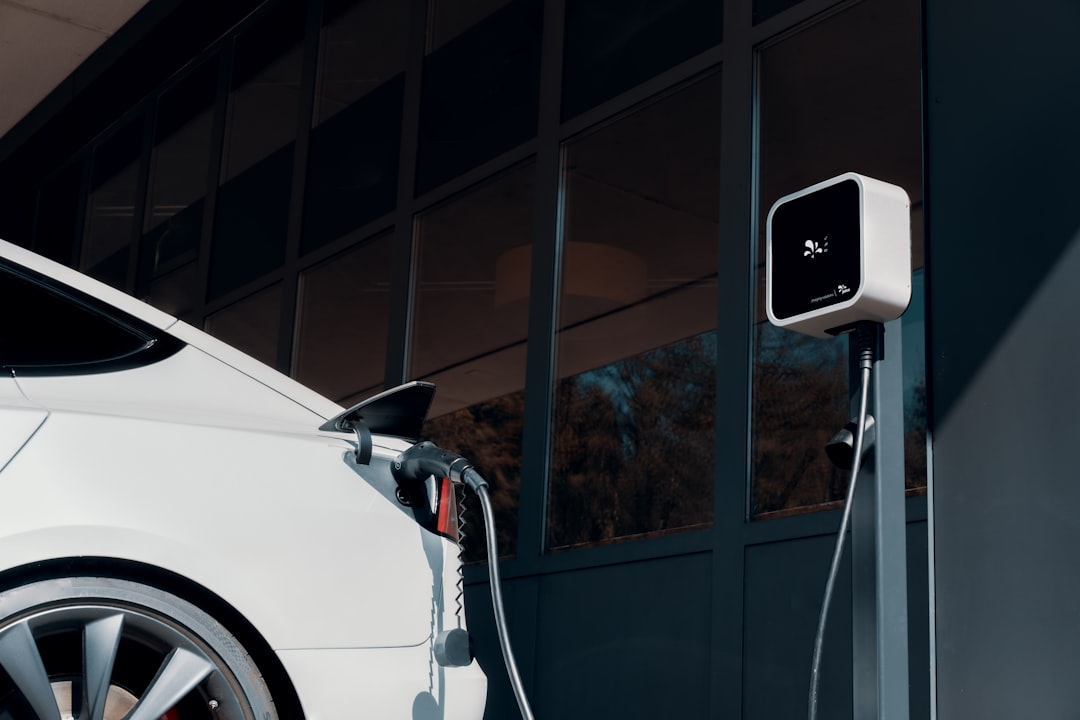
When Backup Power Beats Pure Economics
Let’s be honest: most homeowners don’t buy a solar battery because they’ve run the numbers and found a 15% internal rate of return. They buy it because the lights stay on when the neighborhood goes dark. That’s a different kind of math. And for some people, that math adds up fast.
The Real Cost of a Blackout
You can’t put a price on your kid’s insulin staying cold. But you can try. Here’s a quick breakdown of what a single eight-hour outage might cost you, depending on your situation:
| Scenario | Direct Financial Loss | Hidden Costs |
|---|---|---|
| Refrigerator/freezer spoils (full) | $300–$600 | Time to restock, gas money |
| Lost work hours (remote employee) | $200–$800 | Missed deadlines, client trust |
| Medical device failure (CPAP, oxygen) | $0 (device damage) | Hospital visit, health risk |
| Home security system offline | $0 (if no theft) | Anxiety, potential break-in |
| Sump pump stops (basement flood) | $2,000–$10,000 | Mold remediation, structural damage |
One major storm can wipe out years of “savings” from not buying a battery. That’s not fear-mongering. That’s reality for anyone living in a region with aging grid infrastructure.
Medical Needs Are Non-Negotiable
If you or someone in your home relies on powered medical equipment, the battery isn’t a luxury. It’s a lifeline.
- CPAP machines draw about 30–60 watts. A typical 10 kWh battery (like a Tesla Powerwall or Enphase IQ 10) can run one for 3–5 nights straight.
- Oxygen concentrators pull 300–600 watts. That same battery gives you 6–12 hours of continuous use.
- Electric wheelchairs or scooters need charging every 1–2 days. A battery keeps you mobile when the grid doesn’t.
Think about it: a single ambulance ride costs $1,200 on average. A battery costs $8,000–$15,000 installed. If it prevents just two ER visits, it’s paid for itself in peace of mind alone.
Work-From-Home: The Hidden Paycheck Protector
You’re not just losing power. You’re losing income.
If you work remotely, a blackout during a weekday costs you $25–$100 per hour in lost productivity. That’s not counting the stress of scrambling to a coffee shop or using your phone as a hotspot.
Here’s the real kicker: most home internet modems and routers use 10–20 watts. A battery can keep your entire home office running for 12–24 hours. That means you can finish your shift, attend that client call, and hit your deadline—while your neighbors are sitting in the dark.
Quick math:
- One 8-hour outage per year = 8 hours of lost work.
- At $50/hour, that’s $400 lost annually.
- Over 10 years, that’s $4,000 in lost wages—just from one outage per year.
- Add two outages per year, and you’re at $8,000. That’s almost the cost of a battery.
And if you live in an area with frequent storms or rolling blackouts? You’re leaving money on the table every time the grid blinks.
Food Spoilage: The Silent Wallet Drain
A full fridge costs about $300–$500 to restock. A full freezer? Double that. Most people don’t realize that food spoilage is one of the most common insurance claims after a natural disaster.
- After 4 hours without power, your fridge is borderline.
- After 8 hours, you’re throwing away dairy, meat, and leftovers.
- After 24 hours, the freezer starts to thaw. That’s your entire grocery budget for the month.
A solar battery can run your fridge and freezer for 8–12 hours, sometimes longer if you’re selective. That’s not a luxury. That’s saving $500 every time the grid goes down.
The “Peace of Mind” Price Tag
Let’s put a number on that feeling. A 2023 survey by the U.S. Energy Information Administration found that the average American experiences 1.2 power outages per year, lasting an average of 5 hours. But that’s an average. If you live in California, Texas, or the Northeast, you’re seeing 3–6 outages per year, sometimes lasting days.
Here’s a simple framework to decide if peace of mind is worth it:
- List your “must-run” loads (fridge, internet, medical devices, lights, sump pump).
- Calculate their total wattage (add up the nameplate ratings).
- Multiply by the number of hours you want backup (typically 6–12 hours).
- Compare that to the cost of a battery (roughly $1,000–$1,500 per kWh installed).
If your must-run loads total 2,000 watts and you want 10 hours of backup, you need about 20 kWh of battery capacity. That’s $20,000–$30,000. But if you only need 1,000 watts for 6 hours (fridge, internet, a few lights), a 10 kWh battery at $10,000 covers you.
Now ask yourself: How much would I pay to avoid a single night of no power, no internet, and a flooded basement?
The Intangible Value You Can’t Ignore
You can’t spreadsheet your way through every scenario. Here’s what the numbers miss:
- No more hotel bills after a storm. A battery lets you stay home, sleep in your own bed, and avoid $150–$300 per night.
- No more generator noise. Gas generators are loud, smelly, and require fuel runs. Batteries are silent, clean, and automated.
- No more anxiety. The moment the power flickers, you don’t panic. You know the battery kicks in within milliseconds. That’s worth something.
When the Math Flips
For most people, a battery doesn’t pay for itself through energy arbitrage alone. The payback period is 10–15 years just from shifting solar power to evening use. But when you add outage protection, the math changes.
Consider this scenario:
- You live in a region with 3 outages per year (average 6 hours each).
- Each outage costs you $400 in lost work + $200 in spoiled food = $600 per outage.
- That’s $1,800 per year in preventable losses.
- Over 10 years, that’s $18,000—which is more than the cost of a premium battery system.
In that case, the battery pays for itself in avoided losses alone. Everything else—solar self-consumption, time-of-use savings, backup power—is pure bonus.
A Final Reality Check
I’ve installed hundreds of solar-plus-storage systems. The customers who are happiest with their batteries are almost never the ones who did the most complex ROI spreadsheets. They’re the ones who had a specific fear: “I lost power during a heatwave and my grandmother’s oxygen machine died.” Or “I work from home and missed a critical client call because the grid went down.”
If you have medical needs, a home-based business, or a sump pump that keeps your basement dry, stop trying to justify the battery with pure economics. You’re buying insurance. And insurance is never a great investment—until you need it.
When that next storm rolls in, and your lights stay on while the rest of the block goes dark, you won’t ask if the battery was worth it. You’ll already know the answer.
Time-of-Use Rates: The One Scenario Where Batteries Pay Off
Let’s cut through the noise. For most homeowners, a solar battery is a luxury, not a necessity. But there’s one specific situation where it transforms from a nice-to-have into a genuine money-making machine: time-of-use (TOU) electricity rates.
If your utility company charges you different prices for power depending on the hour, you’re sitting on a potential goldmine. And a battery is the pickaxe.
How TOU Rates Work Against You
Standard flat-rate billing is simple. You pay the same price for a kilowatt-hour (kWh) at 3 PM as you do at 3 AM. TOU flips that. Your utility wants you to stop using power when everyone else is—usually late afternoon to early evening. So they punish you with high peak rates and reward you with low off-peak rates.
Here’s a real-world example from California’s PG&E E-TOU-C plan:
| Time Period | Rate per kWh | Typical Hours |
|---|---|---|
| Peak | $0.42 | 4 PM – 9 PM |
| Off-Peak | $0.25 | All other hours |
That’s a 68% premium just for running your AC during the wrong five hours. Do that every summer day, and you’re bleeding cash.
The Battery’s Simple Job
A battery doesn’t generate power. It stores it. And in a TOU world, its only job is to buy low and sell high—except you’re not selling to the grid. You’re selling to yourself.
Here’s the strategy:
- Charge during off-peak hours. Your solar panels or cheap grid power fill the battery when rates are low (usually overnight or midday).
- Discharge during peak hours. When 4 PM hits and rates spike, your battery powers your home instead of the grid.
You avoid paying the peak rate entirely. That’s pure arbitrage.
Where the Real Savings Live: AC and EV Charging
Two loads dominate your peak-hour consumption: air conditioning in summer, and electric vehicle (EV) charging year-round. These are the heavy hitters that make battery math work.
Air Conditioning: A typical central AC unit pulls 3-5 kW. Run it for four peak hours, and you’re burning 12-20 kWh at $0.42/kWh. That’s $5 to $8.40 per day. Over a 90-day cooling season, that’s $450 to $756 in peak charges alone. A battery that covers that 20 kWh window can wipe out that cost entirely.
EV Charging: Your car is a hungry beast. A full charge for a Tesla Model 3 takes about 60 kWh. If you plug in at 6 PM, you’re paying peak rates for the first three hours. That’s roughly 18 kWh at $0.42 = $7.56 wasted. Shift that charging to midnight at $0.25, and that same session costs $4.50. The battery lets you automate that shift without remembering to set a timer.
The Savings Math: Real Numbers
Let’s build a realistic scenario. You live in a hot climate, have a 5-ton AC unit, and drive 40 miles a day. Your home uses 30 kWh during peak hours (4-9 PM). Without a battery, you pay:
- 30 kWh × $0.42 (peak) = $12.60/day
- 30 kWh × $0.25 (off-peak) = $7.50/day
- Daily savings with battery: $5.10
That’s $153 per month during summer. Over a full year, assuming 6 months of heavy AC use and 6 months of lighter use, your annual savings land around $800 to $1,200.
Now compare that to the cost of a 10 kWh battery like the Tesla Powerwall 3: roughly $10,000 installed after incentives. Your payback period is 8 to 12 years. That’s not spectacular, but it’s real.
When the Math Flips in Your Favor
Some utilities offer aggressive TOU plans with peak rates above $0.50/kWh. In places like San Diego Gas & Electric (SDG&E), peak summer rates hit $0.62. Now your daily savings jump to $11.10. Payback drops to 5-7 years.
A few other scenarios amplify the value:
- Net metering changes. If your utility pays you pennies for exported solar power (like in Hawaii or parts of Arizona), a battery lets you use that power yourself during peak hours instead of selling it cheap.
- Demand charges. Some TOU plans also charge you based on your highest 15-minute usage. A battery can shave that peak, saving you hundreds per month.
- Inverter sizing. If your solar system is oversized, a battery can capture excess generation that would otherwise be wasted during midday.
The Critical Caveat
Batteries only pay off if your peak vs. off-peak spread is at least $0.15/kWh. If your utility’s difference is $0.05, forget it. You’ll never recoup the cost. Check your rate plan. Look for the “time-of-use” or “critical peak pricing” line items. If the spread is thin, pass on the battery.
How to Execute the Strategy
You don’t need to micromanage. Modern batteries like the Enphase IQ 10 or LG Chem RESU have smart software. You set your peak window (say 4-9 PM), and the battery automatically discharges during those hours. Your solar panels will recharge it during the day for free.
For EV charging, pair the battery with a smart charger like a ChargePoint Home Flex. Set the charger to only pull power from the battery during peak hours, or schedule it to charge from the grid at midnight. The battery acts as a buffer, letting you run the AC and charge the car simultaneously without touching expensive grid power.
The Bottom Line
If you’re on a TOU rate with a wide spread, a battery isn’t a luxury. It’s a financial hedge against your utility’s pricing games. You’re essentially buying electricity at wholesale and using it at retail. That’s the one scenario where the numbers work.
But don’t buy a battery just because you have solar. Buy one because you have a rate plan that punishes peak usage. Calculate your daily peak consumption, multiply by the rate spread, and see if the payback makes sense. For most people, it’s a 7-10 year return. For the right home, it’s a no-brainer.
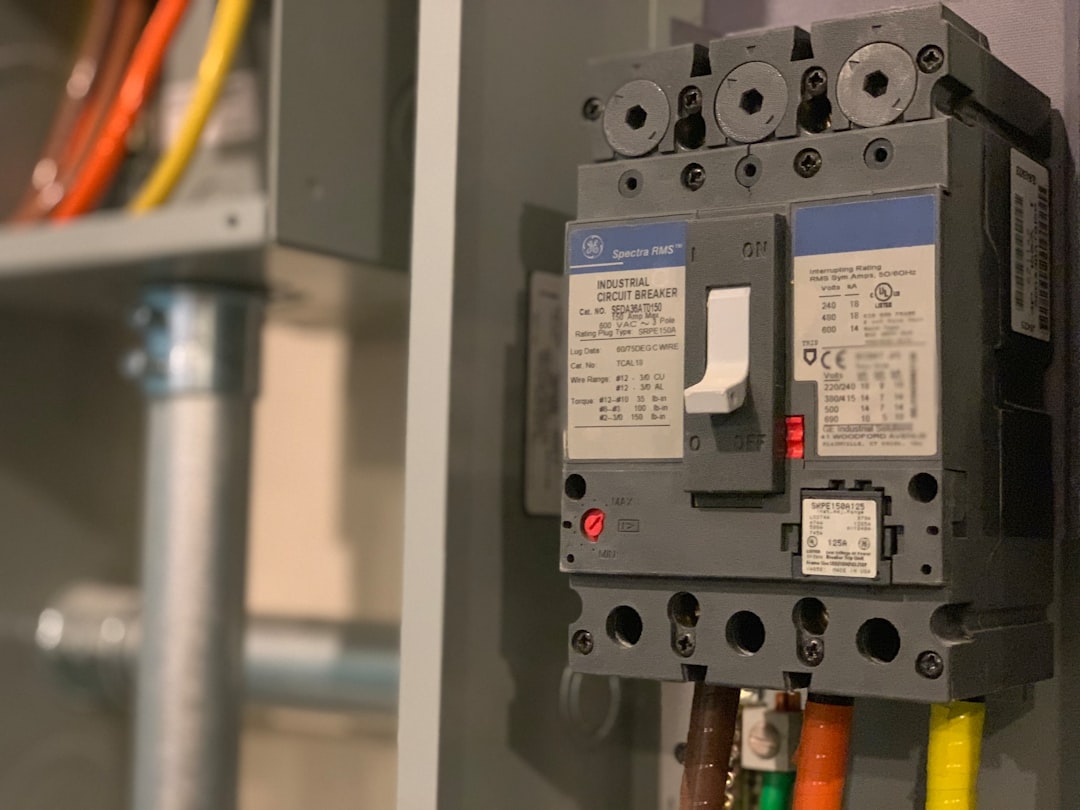
The Smarter Alternative: Skip the Battery, Invest in More Panels
Here is the hard truth most solar salespeople won't tell you: a home battery is a luxury item, not a financial necessity. If your primary goal is to maximize your return on investment (ROI) and minimize your upfront cost, you are almost always better off taking the money you would spend on a battery and putting it into more solar panels.
Let’s run the numbers. A typical Tesla Powerwall 3 costs around $9,000 to $12,000 installed, including hardware and labor. That same budget buys you roughly 4 to 5 kilowatts (kW) of additional solar panels, depending on your location and installer pricing. That is 12 to 16 extra panels on your roof.
That extra solar capacity will generate power for 25 to 30 years. A battery, on the other hand, has a warranty of 10 years. You will likely need to replace it once or twice over the life of your system. From a pure cost-per-kilowatt-hour standpoint, panels win every time.
The Math of "Net Metering" vs. "Self-Consumption"
The battery sales pitch sounds great: "Store your excess daytime power and use it at night!" But this only makes financial sense if your utility has terrible net metering policies.
- Good Net Metering (1:1): Your utility credits you the full retail rate for every kWh you send to the grid. In this scenario, the grid is your battery. It is free, has infinite capacity, and never degrades. Adding more panels to overproduce is a much better financial move. You get paid the same rate for your excess power as you would have saved by storing it.
- Bad Net Metering (Time-of-Use or Low Export Rates): If your utility pays you only 2–3 cents per kWh for exported power but charges you 30 cents at night, a battery might pencil out. But even then, you need to calculate the "spread" carefully.
The Critical Calculation:
- Battery cost per usable kWh stored: ~$800–$1,200 (after tax credits).
- Cost of extra solar panels per kWh produced: ~$200–$400.
You are paying 3x to 4x more per unit of energy for the privilege of storing it. That is not an investment; that is a premium for convenience.
The "Wasted Energy" Myth
Salespeople will tell you that without a battery, you are "wasting" your solar energy when it goes to the grid. This is misleading. You are not wasting it. You are selling it. Even at lower export rates, you are getting cash or credits.
With a battery, you are not "saving" 100% of that energy. You are storing it with inefficiencies. Lithium-ion batteries have a round-trip efficiency of roughly 85–90%. That means for every 10 kWh you put in, you only get 8.5 to 9 kWh back. You lose 10–15% of your energy to heat and chemical conversion. Extra panels have no such conversion loss. They simply produce more power.
When Panels Beat Batteries on ROI (The Data)
Let’s compare two hypothetical systems for a home in California with NEM 2.0 (good net metering) and a $20,000 budget.
| Scenario | System A: Panels Only | System B: Smaller Panels + Battery |
|---|---|---|
| Upfront Cost | $20,000 | $20,000 |
| System Size | 7.5 kW (20 panels) | 4.0 kW (10 panels) + 1 Powerwall |
| Annual Production | 11,250 kWh | 6,000 kWh |
| Annual Bill Offset | ~100% (covers all usage) | ~60% (still pays grid at night) |
| Payback Period | 5–6 years | 8–10 years |
| 25-Year Net Savings | ~$60,000 | ~$35,000 |
You lose nearly $25,000 in potential savings over 25 years by choosing the battery. That is a massive opportunity cost.
The Hidden Benefit: Future-Proofing Your Roof
Solar panels are a fixed asset. They sit on your roof and produce power for decades. A battery is an electrochemical device that degrades every single day. After 10 years, your Powerwall will likely hold only 70% of its original capacity. Your solar panels, meanwhile, will still be producing at 85–90% of their original output.
By investing in more panels now, you are also hedging against future energy needs. If you buy an electric vehicle (EV) in five years, your extra panels will already be producing the power to charge it. If you get a heat pump, your oversized system handles the load. A battery does not increase your total energy production—it only shifts when you use it.
The One Exception (And It’s Small)
I want to be fair. There is one scenario where the "more panels" argument weakens: if your roof is completely full. If you have a tiny south-facing roof with only space for 10 panels, you cannot add more. In that case, a battery lets you store the energy you do produce for later use. But even then, ask yourself: can you fit panels on a different roof face (east or west)? Can you ground-mount a few panels in your yard? Can you install a pergola? Usually, there is a way to add more generation capacity without buying a battery.
The Bottom Line for Your Wallet
Think of a battery like a high-end sports car. It is fun, it gives you independence, and it looks cool. But it is a terrible financial vehicle. Your solar panels are the reliable, fuel-efficient sedan that gets you to retirement.
If your goal is to lower your electric bill as fast as possible, forget the battery. Take that $10,000 and buy 4 more kW of panels. You will break even years sooner, generate more lifetime energy, and never have to worry about a battery degrading or failing. The grid is already your infinite, free battery. Use it.
Operational checklist before you commit
- Check your utility's net metering policy. Full retail net metering makes batteries less valuable.
- List how many outages you had in the last 2 years. More than 3? A battery might be worth it.
- Get a quote for solar panels alone first. Then add the battery cost to see the real price difference.
Frequently asked questions
How much does a home solar battery cost?
Most lithium-ion batteries cost between $10,000 and $15,000 installed. That is on top of your solar panel cost.
Can a solar battery save me money on my electric bill?
Only if you have time-of-use rates or no net metering. Otherwise, you export power to the grid for free. A battery shifts when you use power, not how much.
Final takeaways
Solar batteries are not a must-have for most homeowners. They are a luxury add-on that provides backup power during outages. If your grid is reliable and net metering is good, skip the battery and save your cash.
If you live in an area with frequent blackouts or expensive peak rates, a battery can be a smart buy. Just know it is a cost, not a money-maker. Run the numbers for your specific home before signing anything.
Tools to validate your solar costs
Use these tools to calculate solar panel costs, utility inflation, and long-term savings potential.